Table of Contents
Ethical humanizers improve language, not deceive detectors. It helps individuals write naturally, preserve originality, and validate message sensibly. Instead of browsing for faster ways, find out just how to create naturally and transparently.
AI detection devices can provide practical insight, yet they aren't sure-fire. The majority of make use of statistical models to determine writing that "looks" like AI outputbased on patterns like uniform structure, high predictability, or absence of individual information.
Does Turnitin detect Writesonic Text Humanizer
Because AI writing is progressing rapidlyand since human composing differs widelyno detection tool can ensure excellent accuracy.
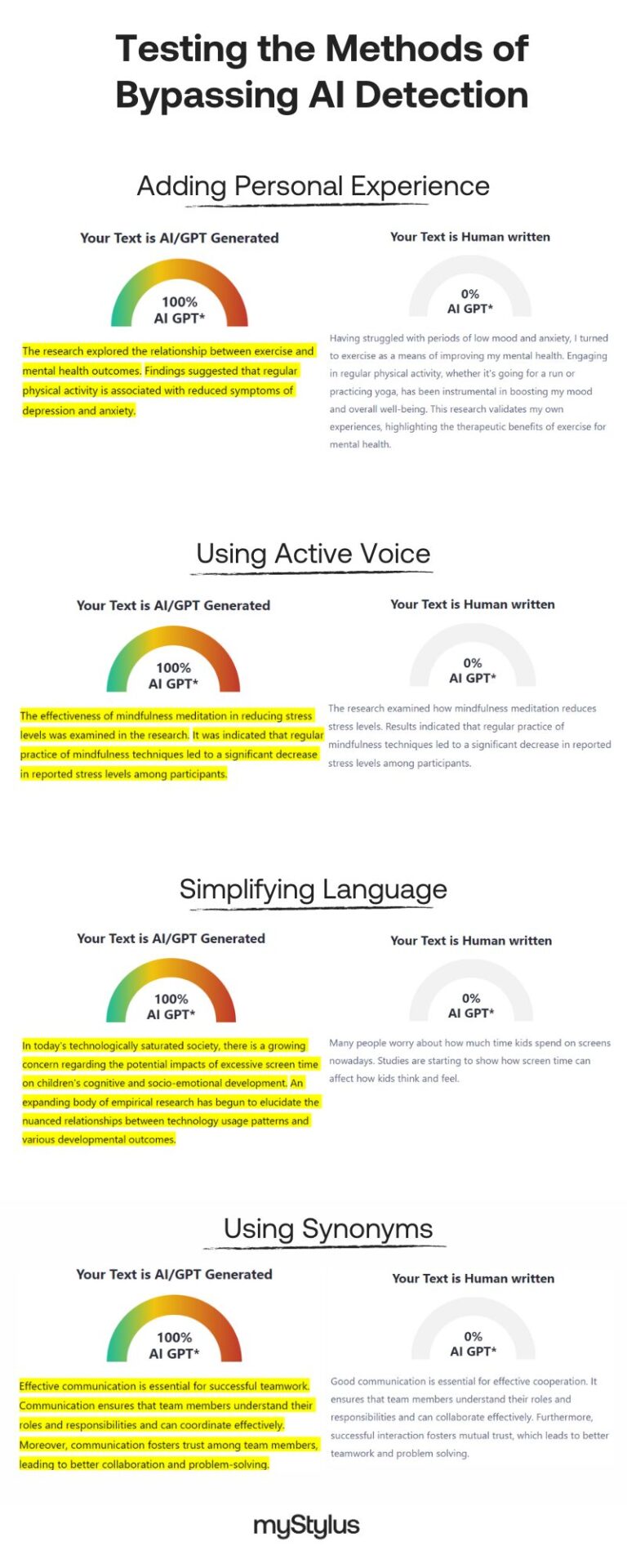
The goal isn't to "rip off" AI detectors or hide your use of these toolsit's to make sure your final item feels authentic, personal, and unmistakably your own. Below are a few means to collaborate with AI while keeping your creating based in your own voice: Think about AI as a composing aide, not the main writer.
Choose vivid, specific, and emotionally resonant words in order to make your writing unmistakably human. A friend or associate can help find repetitive wording, awkward sentences, and valid mistakes.

However at the end of the day, your ideas, your point of view, and your voice are what make writing resonate with readers. When AI is used without an understanding of how to utilize it sensibly, it can result in unintentional effects, like: Plagiarism Overly common or standard web content Violations of scholastic stability plans A loss of originality, character, or reliability Below's a tip: When unsure, be clear.
Does Turnitin detect Writesonic Text Humanizer
In academic and professional settings especially, it's essential to be transparent concerning the role AI plays in your writing process. Some organizations might anticipate AI-generated material to be pointed out or revealed, just like any type of other resource.
At Grammarly, our team believe responsible AI use has to do with improving human creativitynot changing it. When you lead with intent, creativity, and quality, your writing is more probable to reflect who you are and what you really mean to say. And with devices that sustain transparency, you can feel extra certain navigating the evolving technology.
You need to never count on the results of an AI detector alone to identify whether AI was used to produce content. AI detectors can recognize patterns discovered in human writing and AI-generated message, however they can not definitively conclude whether AI was made use of. These devices need to be one component of an all natural approach to assessing creating creativity.
Bypassing discovery ethically does not suggest concealing those patterns it suggests rewording your message right into real human form while keeping your message accurate. You simply require to compose and rewrite the method human beings connect.
Does Turnitin detect Writesonic Text Humanizer
Practical actions to make AI-assisted writing all-natural, efficient, and honest: Enhance tone, rhythm, and quality. Use an AI detector to validate patterns. AI often tends to produce "too excellent" sentences.
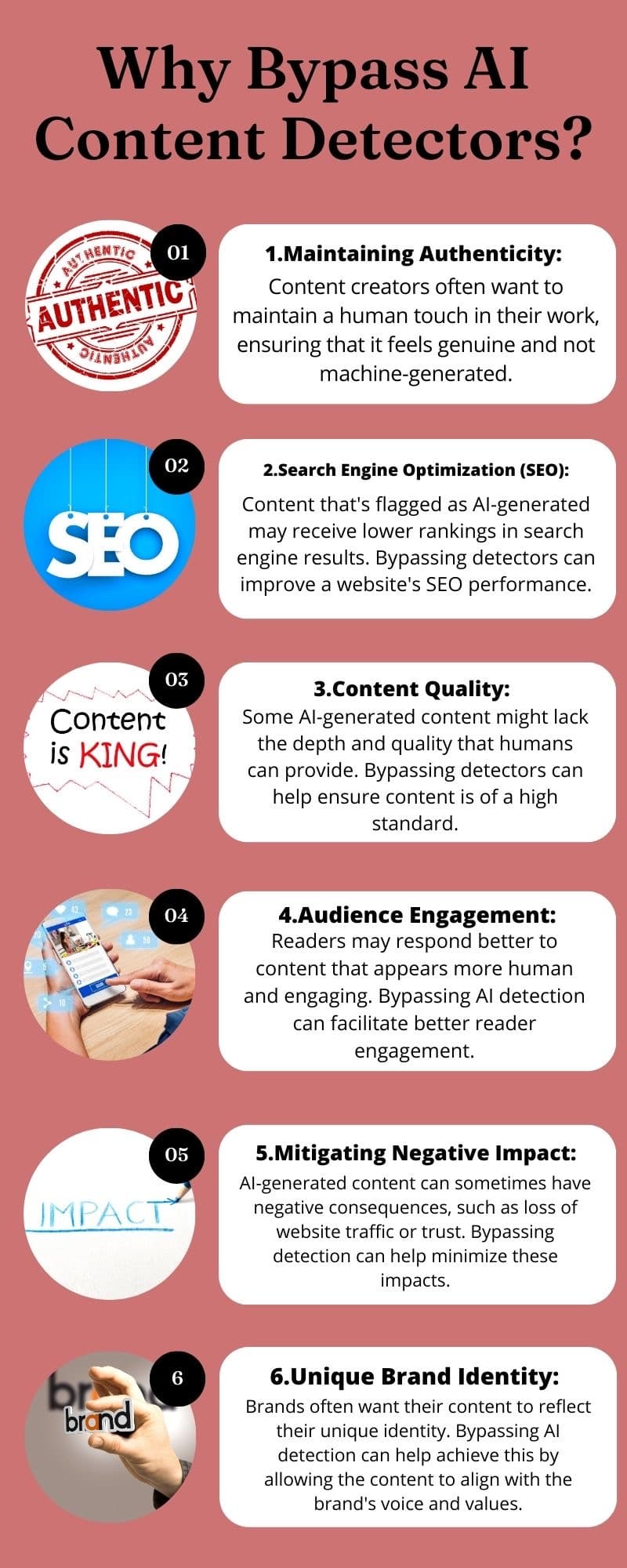
A user pastes text right into an "undetectable AI" device that shuffles words to method detectors. You can bypass AI detectors lawfully only by guaranteeing your composing comes to be genuinely human not artificially camouflaged.
No. Most depend on adjustment that violates plans and produces poor writing. Bypassing hides; humanizing enhances. Ethical humanizers boost language, not deceive detectors. Yes. It aids users write naturally, preserve creativity, and verify text properly. Examine your institution's plan, humanize sensibly, confirm credibility, and divulge if needed. Instead of searching for shortcuts, find out how to write normally and transparently.

Navigation
Latest Posts
Does Turnitin detect Writesonic Text Humanizer
Does Turnitin detect Writesonic Text Humanizer
Does Turnitin detect Writesonic Text Humanizer